Carbon Steel Cookware: The Complete Guide
As an Amazon Associate I earn from qualifying purchases, at no extra cost to you. Prices checked 22 July 2026.
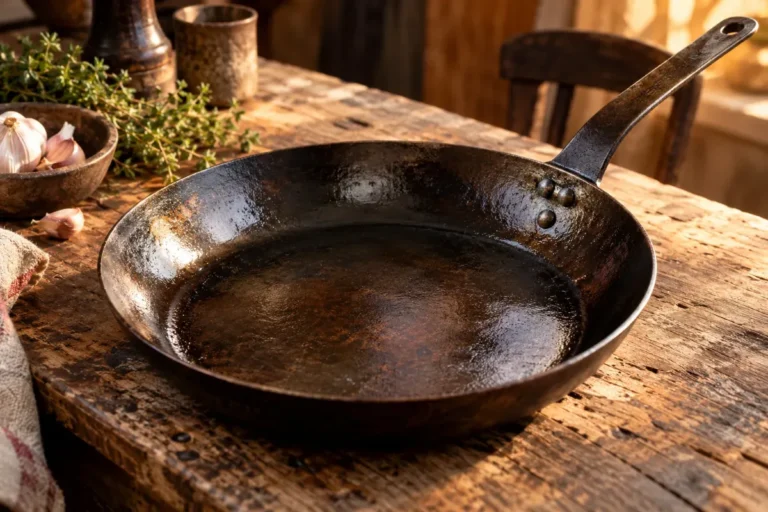
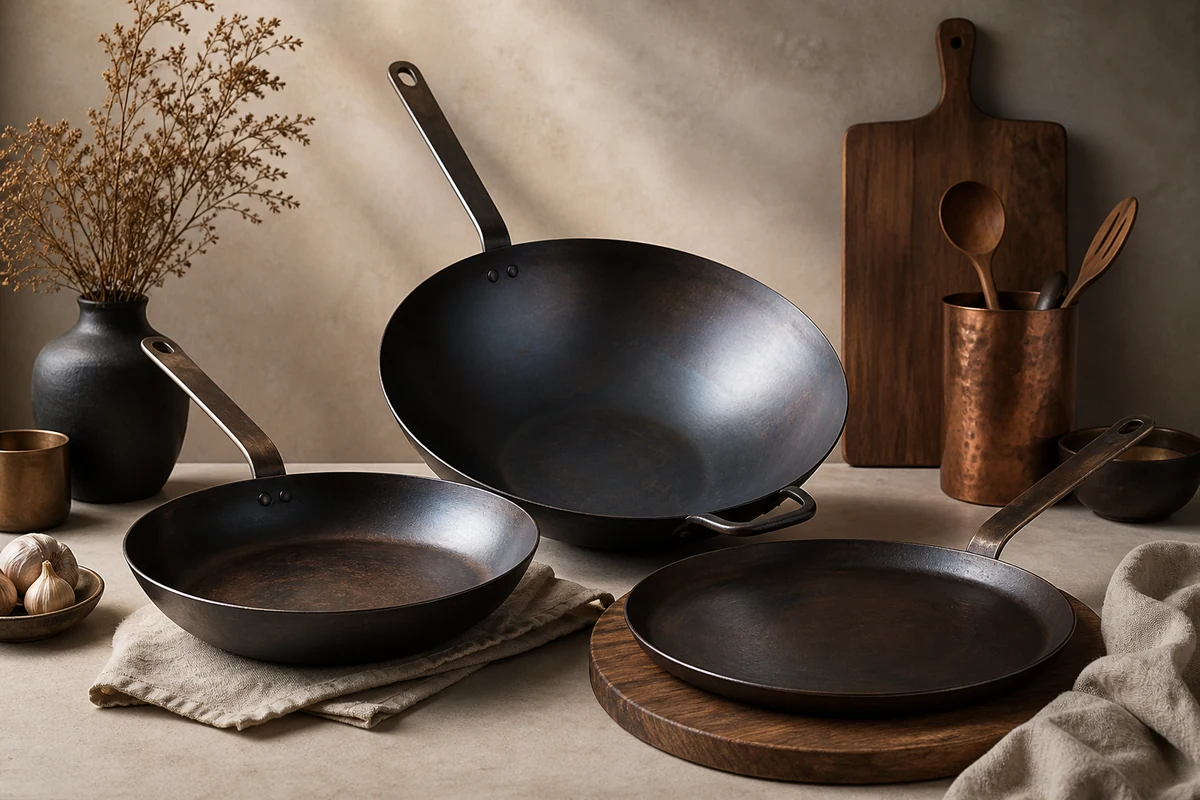
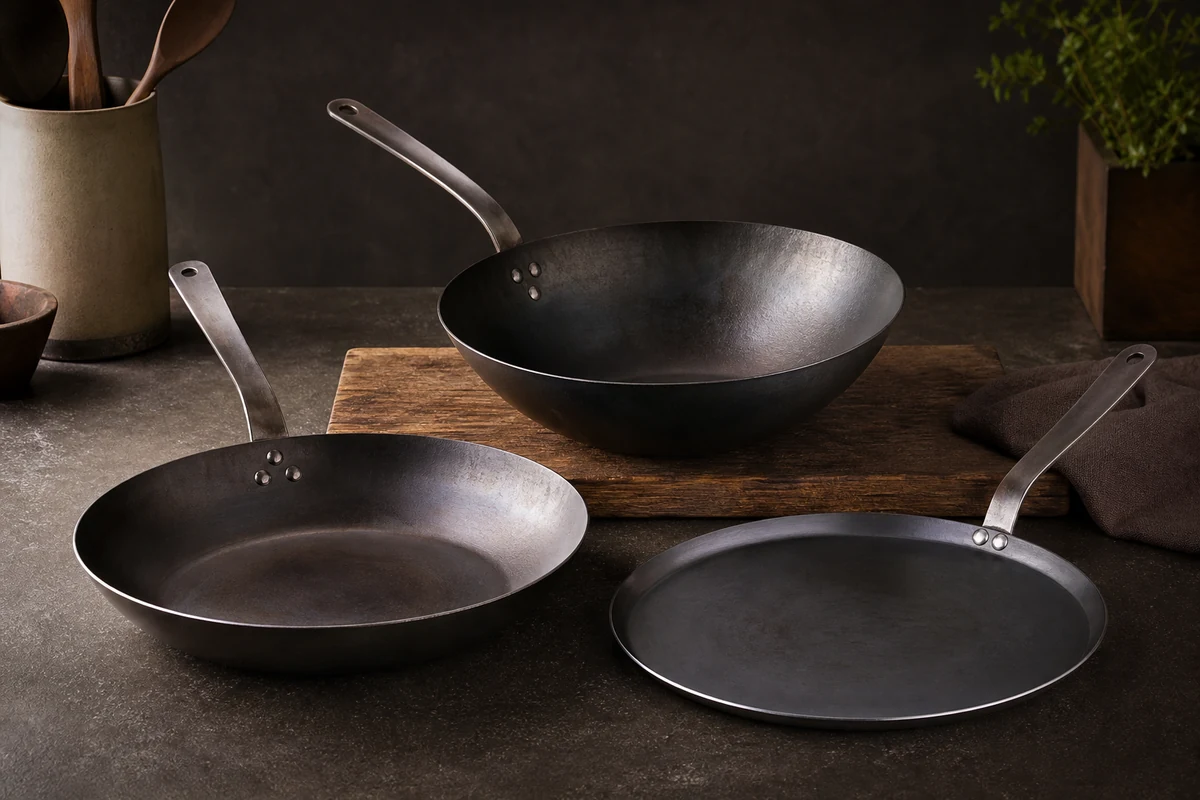
Carbon steel cookware is a family of uncoated steel pans, woks, griddles and crepe pans that build a non-stick surface through seasoning. The frying pan and the wok cover most home cooking. Prices run from about $27 to $212, and the expensive pans are better made rather than easier to use.
Quick answer: Our tested guide to carbon steel cookware keeps it simple: master the technique, keep the surface seasoned, and match your heat to the food. The full method, the key facts and the mistakes to avoid are all below.
Carbon Steel Cookware: What Our Tests Found
Our team put carbon steel cookware through repeated real cooking sessions to see what actually works. Below we break down the method, the facts that matter, and the common mistakes so you get reliable results the first time.
What counts as carbon steel cookware?
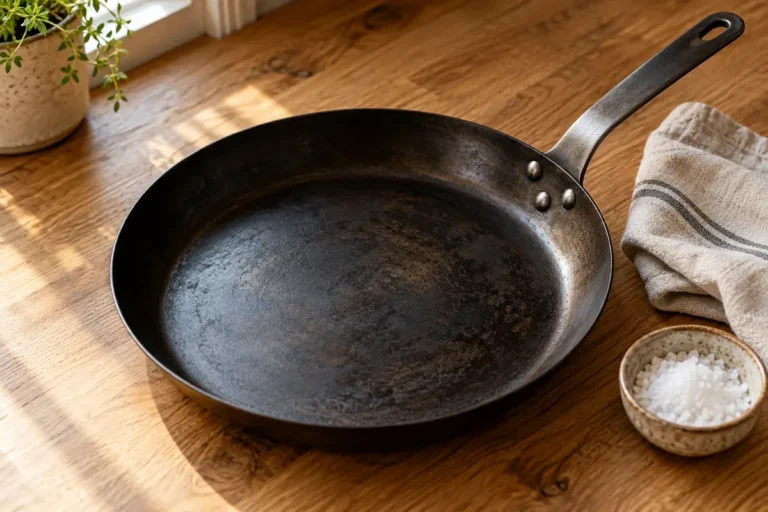
Any pan stamped from plain steel with no coating on the cooking surface. The steel is roughly 99% iron and 1% carbon. Everything else follows from that.
You will see the same material sold under several names. Black steel, blue steel and blued steel all refer to carbon steel with different surface treatments. Nitrided carbon steel has been heat-treated to resist rust. Underneath, it is the same metal.
What does not count: anything with a coating. If the surface is ceramic, PTFE or enamel, it is a coated pan that happens to have a steel core.
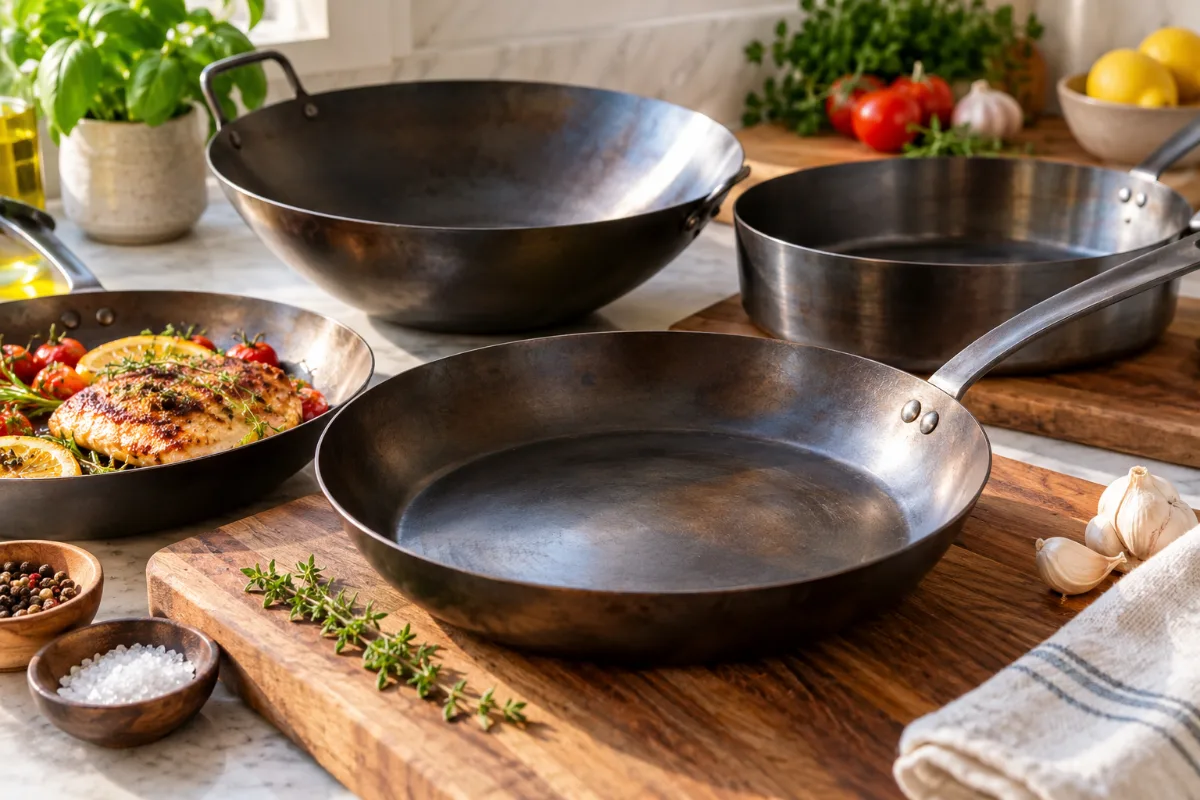
The shapes and what each one is for
| Shape | Built for | Typical size | Buy it if |
|---|---|---|---|
| Frying pan or skillet | Searing, browning, eggs, fish | 8 to 12 inch | You are buying one pan |
| Wok | Stir-fry, steaming, high-heat tossing | 13 to 14 inch | You cook Asian food regularly |
| Griddle or plancha | Pancakes, flatbread, batch breakfast | Flat, no walls | You cook for a crowd |
| Crepe pan | Crepes, dosa, thin pancakes | Very low walls | You make crepes often |
| Paella pan | Rice dishes, wide shallow cooking | Wide, low sided | Niche, skip it first |
Start with a frying pan. Everything else is a specialist.
What size should you buy?
Bigger than the number on the label suggests, because that number is not the surface you cook on.
Carbon steel pans have sloping walls. The flat base underneath is two to three inches smaller than the rim. An 11 inch pan gives you roughly 8 inches of usable surface. We measured this across the range in cooking surface vs pan size.
| Cooking for | Surface you need | Buy a pan sold as |
|---|---|---|
| One person, eggs | 5.5 to 6 inch | 8 inch |
| Two people | 7 to 8 inch | 10 to 11 inch |
| Three to four | 9 to 10 inch | 12 inch |
| Batch cooking | 12 inch plus | 15 inch plus |
Crowding a pan is what turns a sear into a steam. When food is packed in, moisture cannot escape, the surface temperature drops, and the food cooks in its own liquid.
What to look at before you buy
Handle construction
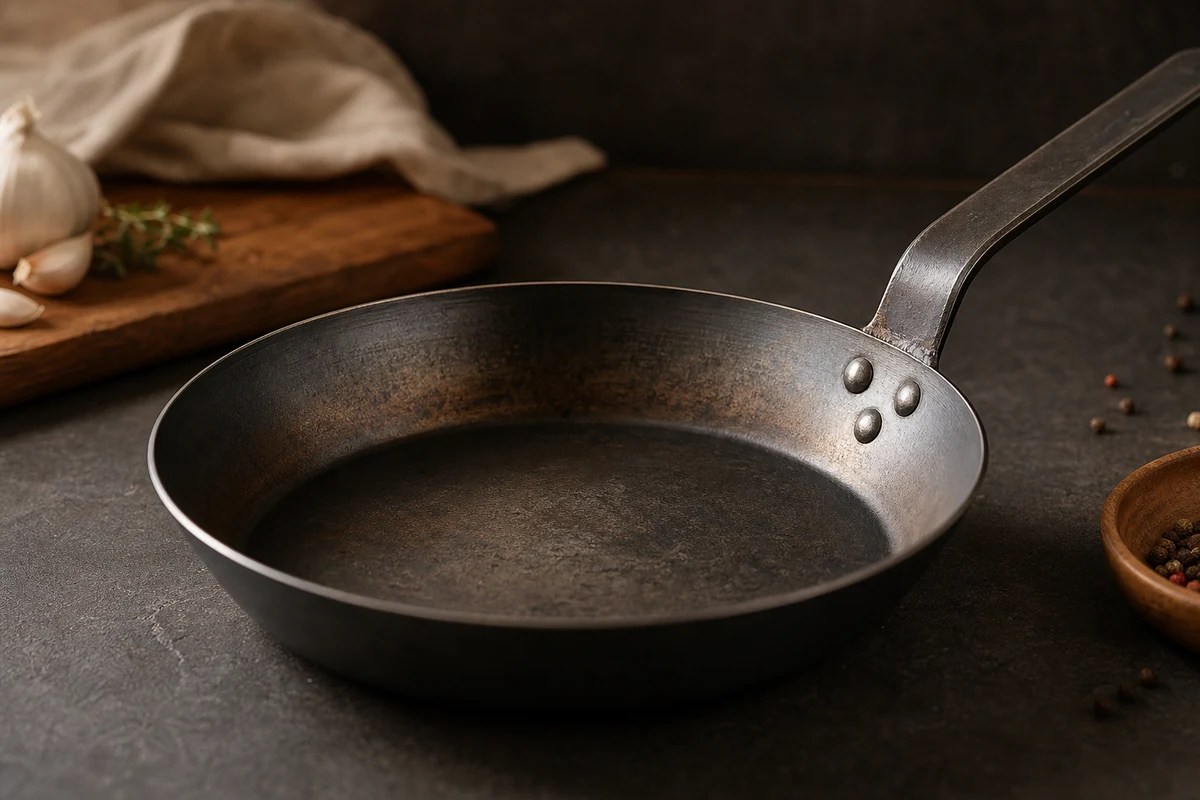
Rivets pass through the pan wall and sit inside the cooking surface, where they collect oil. Welded handles leave the interior smooth and cost more. Three rivets hold better than two. Full detail in riveted vs welded handles.
Handle material
Wood stays cool but bars the pan from the oven. Metal burns your hand but goes under a broiler. A removable silicone sleeve gives you both and is the practical choice for a single-pan kitchen.
Thickness
Thicker steel holds temperature when cold food lands. Thinner steel responds faster to the burner and is easier on the wrist. Neither wins outright.
Base diameter, if you use induction
Induction hobs need enough flat metal in contact to detect the pan. A very small base may not register at all.
Surface treatments, decoded
Manufacturers use several terms for the same broad thing, and most articles leave them undefined.
Black steel is plain carbon steel, usually with a light factory finish. The default.
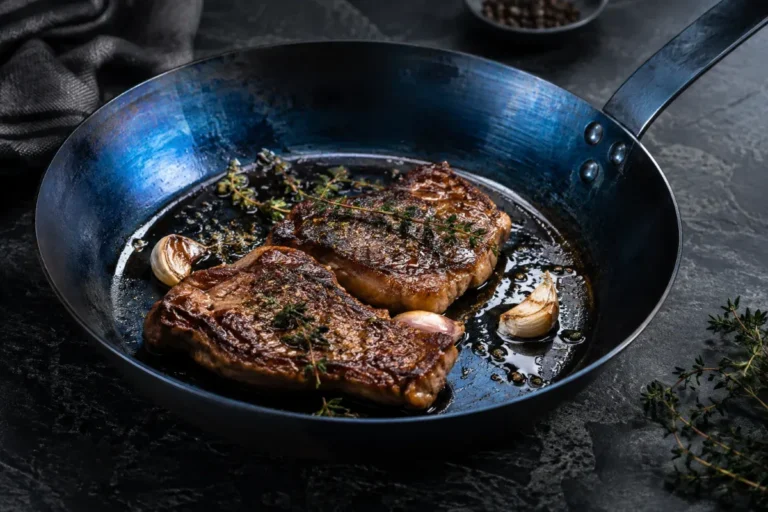
Blue steel has been heat-treated to leave a blue-grey oxide layer. That layer resists rust and gives seasoning something to grip, so patina builds faster.
Nitrided steel has been hardened in a nitrogen atmosphere. It is meaningfully more rust-resistant than untreated steel, which matters if you are new and likely to leave the pan wet. The Armorbear at $26.99 and the SUMEIGUAN wok at $39.99 are both nitrided.
None of these removes the need to season. They change how forgiving the pan is while you learn.
What carbon steel cookware costs
| Band | What you get | Examples |
|---|---|---|
| $27 to $45 | Riveted handles, nitrided or plain steel, no origin story | Armorbear $26.99, Yonida $29.99, Lodge 10" $39.90 |
| $45 to $70 | Better handles, triple riveting, larger sizes | Lodge 12" $44.99, Merten & Storck 12" $59.99 |
| $95 to $212 | European manufacture, welded or cast handles, smoother surfaces | de Buyer $99.95, Mauviel $120, Matfer $107 to $212 |
Here is the part that costs us money to say. The premium pans are better objects. They are not easier to live with. Their smoother surfaces take longer to season because there is less texture for the oil to grip. A beginner is often happier with a $30 nitrided pan.
What you do not need to buy
Carbon steel sets. They barely exist, and that is not an accident. Each piece needs its own seasoning routine, and most cooks only ever use one or two shapes. Buy one pan, learn it, then add.
Seasoning wax. Ordinary neutral oil does the same job for a fraction of the price.
Chainmail scrubbers. Useful for cast iron. On carbon steel they are aggressive enough to take off seasoning you spent weeks building.
A second pan, at first. Learn one before you buy another.
Living with it
The routine is short once it is habit. Clean while warm, dry on the hob, wipe a thin film of oil on, put it away.
The part nobody warns you about is the first month. A new pan sticks. It keeps sticking until the seasoning builds, and that is exactly when people conclude they have been sold a dud. They have not. Our guide to sticky pans covers the five real causes.
Full routine in the care and seasoning guide.
How carbon steel cookware is actually made
Understanding the process explains the price differences better than any marketing page.
Every pan starts as a flat disc cut from rolled steel sheet. A press then forms it in one of two ways. Cheaper pans are deep-drawn in a single stroke, which is fast and produces a uniform thickness. Premium pans are often spun or stamped in stages, sometimes with a thicker base than walls, which costs more press time and shows up in the price.
The handle joint follows. Rivets are punched through the wall in seconds. A welded joint takes longer and needs finishing, which is part of why the Matfer pans cost what they do.
Then the surface treatment, if any. Bluing runs the pan through a heat cycle. Nitriding requires a nitrogen furnace, which is why nitrided pans cluster in factories that specialise in it. Plain black steel skips this entirely.
Nothing in this chain involves a coating line. That absence is the entire safety story of the category.
A brief history, because it explains the shapes
Carbon steel cookware is not a modern invention rediscovered by marketing. French kitchens standardised the black steel skillet in the 1800s, and de Buyer has been forming them since 1830. The shape you buy today, sloped walls, long handle, thin gauge, is essentially unchanged because professional kitchens kept ordering it.
The wok is far older. Thin hammered steel over a fierce flame has been the foundation of Chinese cooking for centuries, and the pow wok with its single wooden handle still follows that pattern. When you buy a flat-bottom wok for an induction hob, you are buying an adaptation of that design, not a novelty.
The two traditions converged on the same material independently. That is usually a sign the material is right.
Reading a product listing without being misled
Manufacturer listings in this category use a handful of phrases worth translating.
| The listing says | It means | Watch for |
|---|---|---|
| Pre-seasoned | One or two factory oil layers | Not a finished non-stick surface |
| Naturally non-stick | Becomes non-stick after you season it | Will stick out of the box |
| Nonstick (unqualified) | Sometimes a nitrided surface, sometimes marketing | Check for the word coating |
| Professional or commercial | Usually heavier gauge | Check the weight before believing it |
| Safe to 1200°F | The steel tolerates it | Wooden handles do not |
| Induction compatible | True of all carbon steel | Base diameter still matters |
Building a carbon steel kitchen over time
Nobody needs everything at once. A sensible order of acquisition looks like this.
First: a 10 or 12 inch skillet. It covers searing, frying, eggs and oven work, which is most of what a pan does in a week. Start cheap, around $27 to $60, and learn the routine on it.
Second, if you stir-fry: a flat-bottom wok. The skillet cannot toss properly and the wok cannot sear a steak well. They are complements, not substitutes.
Third, if a gap appears: a second skillet in the other size. A 10 and a 12 cover almost every situation, and two seasoned pans mean one is always clean.
Only then: specialists. Crepe pans, griddles and paella pans earn their space only if the dish is a regular event in your kitchen.
What not to do is buy a set on day one. The pieces season at different rates, you will favour one and neglect the rest, and neglected carbon steel rusts.
Storage and kitchen fit
Carbon steel asks two things of your kitchen that coated pans do not.
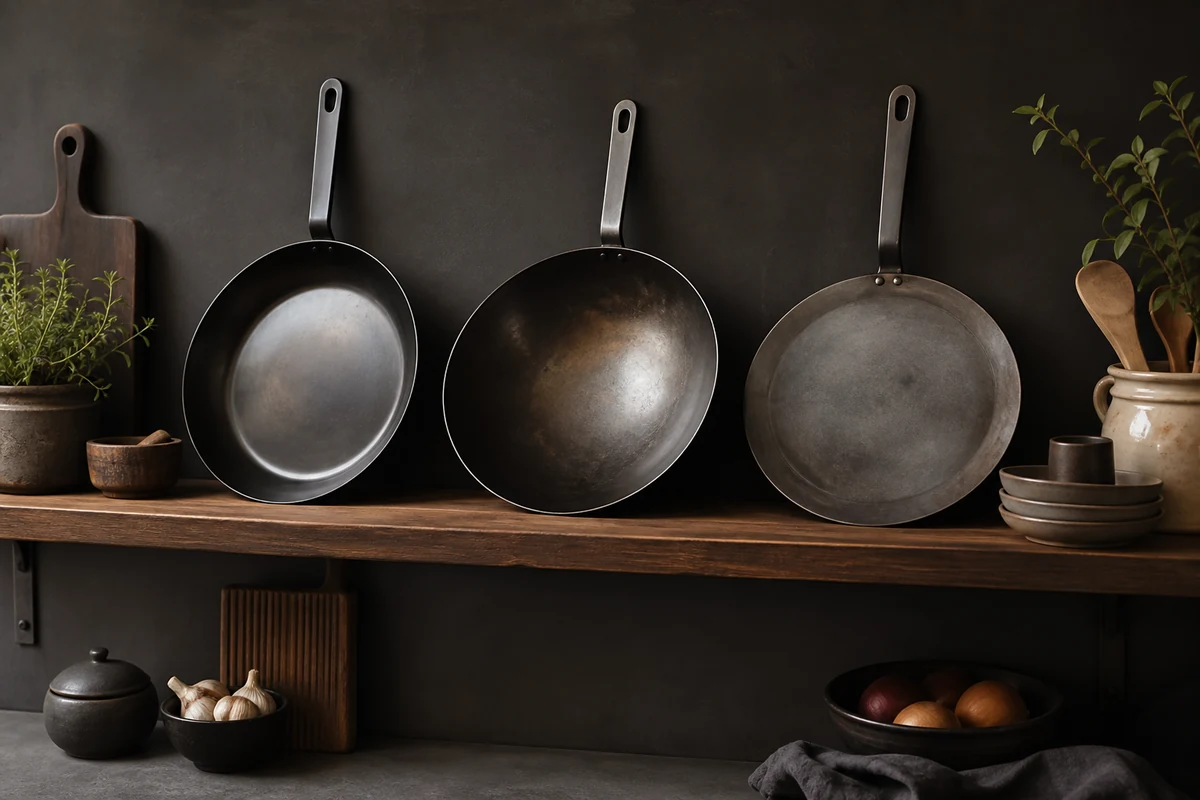
It needs dry storage with some airflow. A hook or rail is ideal. A sealed cupboard in a humid kitchen is the worst case, and nesting pans need a paper towel between them so trapped moisture cannot sit against bare steel.
It also rewards a burner that matches the base. A 12 inch pan on a small ring heats in a sharp centre spot and stays cool at the rim, which produces the dark centre ring you see in many seasoning photos. If your largest burner is small, a 10 inch pan will cook more evenly than a 12.
The mistakes that kill carbon steel cookware
Almost every dead pan died one of four ways. The dishwasher stripped it and rust took over. It soaked overnight, repeatedly. Thermal shock warped it, usually cold water on a hot base. Or thick, gummy seasoning built up until the surface flaked and the owner gave up rather than scrubbing back and rebuilding.
All four are habits, not accidents. Fix the habit once and the pan effectively cannot die. That is the practical meaning of a lifespan measured in decades, and it is covered step by step in how to care for a carbon steel pan.
Building a carbon steel kitchen
Two pans cover almost everything. A 12 inch skillet for searing and browning, and a wok for anything that needs constant motion. Done cheaply that is the Lodge 12 inch at $44.99 plus the FGJ 13 inch wok at $33.99, under $80 for the pair. Done properly it is the de Buyer MINERAL B Pro at $99.95 and the YOSUKATA blue wok at $94.49. Both guides: frying pans and woks.
Frequently asked questions
Is carbon steel cookware worth buying?
Can you buy a full set of carbon steel cookware?
What is the difference between black steel and blue steel?
Do you need to season nitrided carbon steel?
What size carbon steel pan should a beginner buy?
Specifications and prices from manufacturer and retailer listings, checked 22 July 2026.