Can You Use Soap on a Carbon Steel Pan?
By the Carbon Steel Pan test team · Last updated September 2026
Yes, you can use a little modern dish soap on a carbon steel pan. Today’s soaps are gentle detergents that clean food without stripping cured seasoning, which is hardened oil bonded to the metal. The old no-soap rule came from harsh, lye-based soaps of the past. Just skip long soaking and heavy scouring.
Few kitchen rules cause as much anxiety as this one. New owners scrub their pans with plain water and a prayer, terrified that one drop of soap will undo weeks of seasoning. It will not. The fear is real, but it is built on outdated information. Once you understand what seasoning actually is and what soap actually does, the whole worry falls away.
The short answer
A little modern dish soap is fine on carbon steel. Use it when the pan needs it, rinse, dry over heat, and wipe on a thin coat of oil. Your seasoning survives untouched.
The confusion comes from treating seasoning like a fragile film of grease sitting on top of the metal. It is not. Seasoning is a hardened layer chemically bonded to the steel, and a gentle detergent cannot lift it. Understanding that difference is the whole answer, so let us look at where the myth started and why the science says otherwise.
Quick answer: Our tested guide to use soap on carbon steel keeps it simple: master the technique, keep the surface seasoned, and match your heat to the food. The full method, the key facts and the mistakes to avoid are all below.
Use Soap On Carbon Steel: What Our Tests Found
Our team put use soap on carbon steel through repeated real cooking sessions to see what actually works. Below we break down the method, the facts that matter, and the common mistakes so you get reliable results the first time.
Where the no-soap myth came from
The rule is not made up. It comes from a time when it was true. For much of history, dish soap was made from lye, a strong alkaline substance left over from old soap-making methods. Lye is powerful enough to break down oils and fats, which is exactly what it did to the seasoning on a cast iron or carbon steel pan. In those days, keeping soap away from a seasoned pan was sound advice.
Kitchen wisdom passed down through families, and the warning came with it, long after the soap changed. Modern dish soaps are formulated differently. They are mild surfactants designed to lift grease and food from dishes without the caustic strength of old lye soaps. The rule outlived the reason for it.
America’s Test Kitchen tested this directly and found that a small amount of modern dish soap does not damage a well-seasoned surface (verify). The advice you inherited was correct for the soap your grandparents used. It does not apply to the bottle under your sink today.
It also helps to know how much soaps have changed. Traditional soap was made by combining fat with lye in a process called saponification, and cheaper or homemade versions often left extra lye in the mix. That leftover alkalinity is what attacked seasoning. Most of what we call dish soap now is not true soap at all but a blend of synthetic detergents tuned to be gentle on skin and cookware alike. The word stuck even though the chemistry moved on, which is how a warning about lye ended up aimed at a bottle of mild dish liquid.
Why cured seasoning resists soap
To see why soap is harmless, you have to know what seasoning is. When you heat oil on a carbon steel pan, it does not just dry. It goes through polymerization, a chemical reaction where the oil molecules link together and bond to the metal, forming a hard, slick layer. This is the same kind of process that hardens a drying oil into a solid finish on wood or a painting.
That cured layer is not grease. It is closer to a hardened plastic film locked onto the steel. Dish soap works by surrounding loose fat and food particles so water can rinse them away. It has no effect on a polymerized layer that is chemically bonded to the metal, because there is nothing loose for the soap to grab.
Food scientists describe seasoning as a form of hardened, bonded oil rather than a wipeable coating, which is precisely why it holds up to normal washing. So when you wash with a little soap, you remove the food and the loose surface oils. The cured seasoning underneath stays put. That is the layer doing the nonstick work, and soap does not touch it.
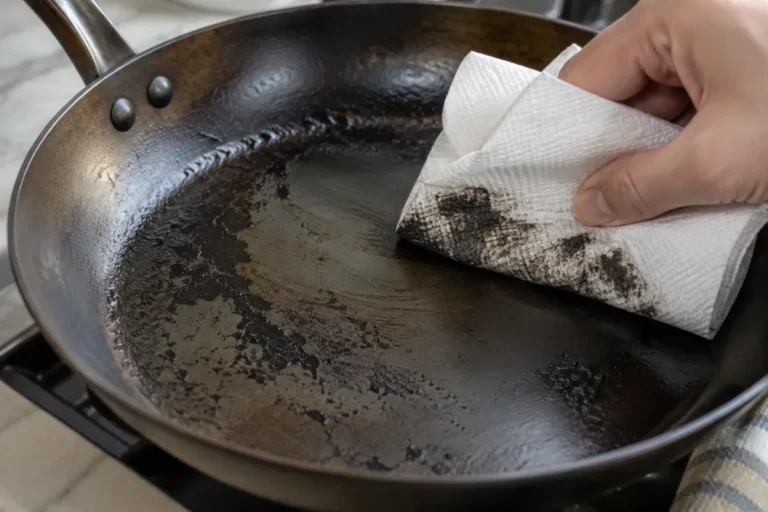
There is a useful test that proves the point. A well-seasoned pan is dark brown to black and dry to the touch, not greasy. If your pan feels slick or sticky with oil, that is loose surface oil, not cured seasoning, and soap will rinse it away. That is fine, because a fresh oil wipe replaces it. What you cannot wash off is the hard, matte layer bonded into the metal. Run a clean pan under soapy water and dry it, and that dark surface is still there, doing its job. Once you have felt the difference between a greasy film and a cured surface, the fear of soap disappears for good.
What actually harms seasoning
If soap is not the threat, what is? Three things do real damage, and none of them is a squirt of detergent.
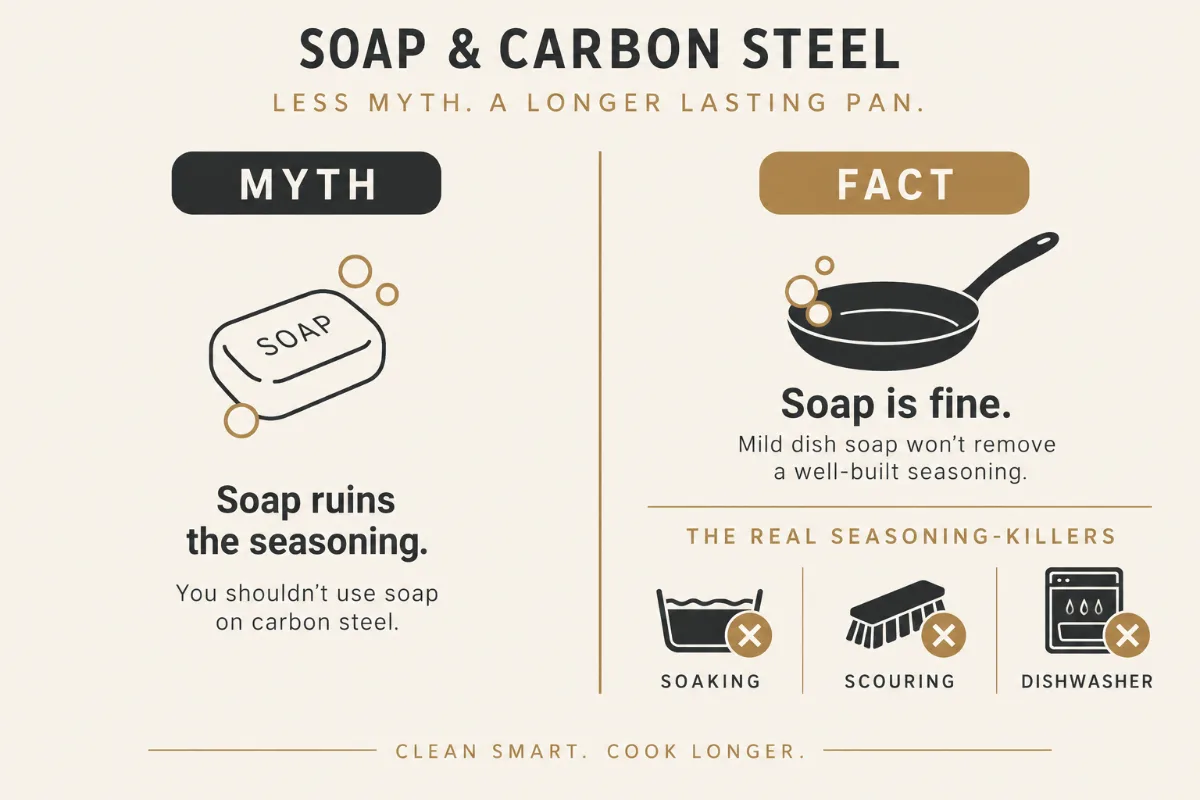
Long soaking is the biggest culprit. Leaving a pan submerged in water for hours lets moisture work into the surface, which promotes rust and can lift seasoning at weak spots. Wash the pan and get it out of the water promptly.
Harsh scouring is the second. Attacking the pan with steel wool or an abrasive pad and heavy pressure grinds off seasoning by force. A soft sponge or a gentle scrub does the job without stripping the layer.
The dishwasher is the third. It combines everything bad at once: a long soak, harsh high-alkaline detergent, and a wet dry cycle. A dishwasher will strip seasoning and rust a carbon steel pan, so never put one in. These are the real enemies, and a normal wash with mild soap is not among them.
It is worth seeing why the dishwasher is so much worse than the sink. Dishwasher detergent is far stronger than hand soap, engineered to blast baked-on food without any scrubbing, and it is strongly alkaline in a way modern hand soap is not. Pair that with a fifteen-minute soak in hot water and a drying cycle that cannot reach every surface, and you have created the exact conditions that harm carbon steel. Hand washing with dish liquid shares none of these. The soap is milder, the contact is brief, and you control the drying. Lumping the two together is where a lot of the confusion comes from. One is fine, the other ruins pans.
You may also hear that scrubbing with coarse salt is a safe way to clean without soap. It works, and it is a fine method for lifting stuck food, but it is not proof that soap is dangerous. Salt is just a gentle abrasive. Use it when you like, and use soap when you like. Neither strips a cured surface, and both leave the pan needing the same dry-and-oil finish.
How to clean carbon steel safely
Cleaning is simple once the fear is gone. Here is the routine that keeps a pan slick and rust-free.
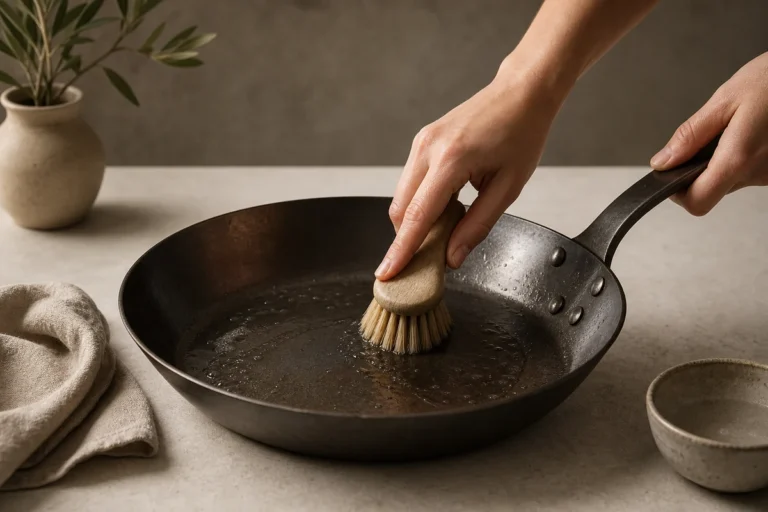
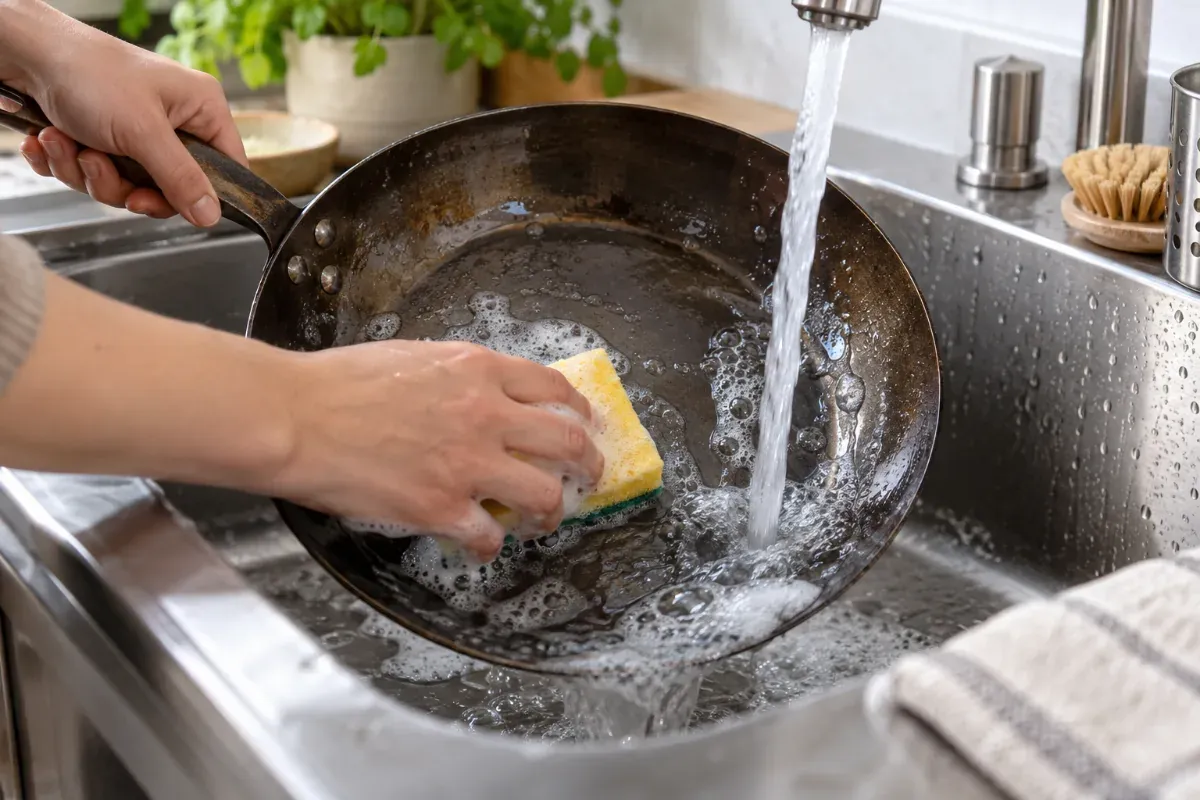
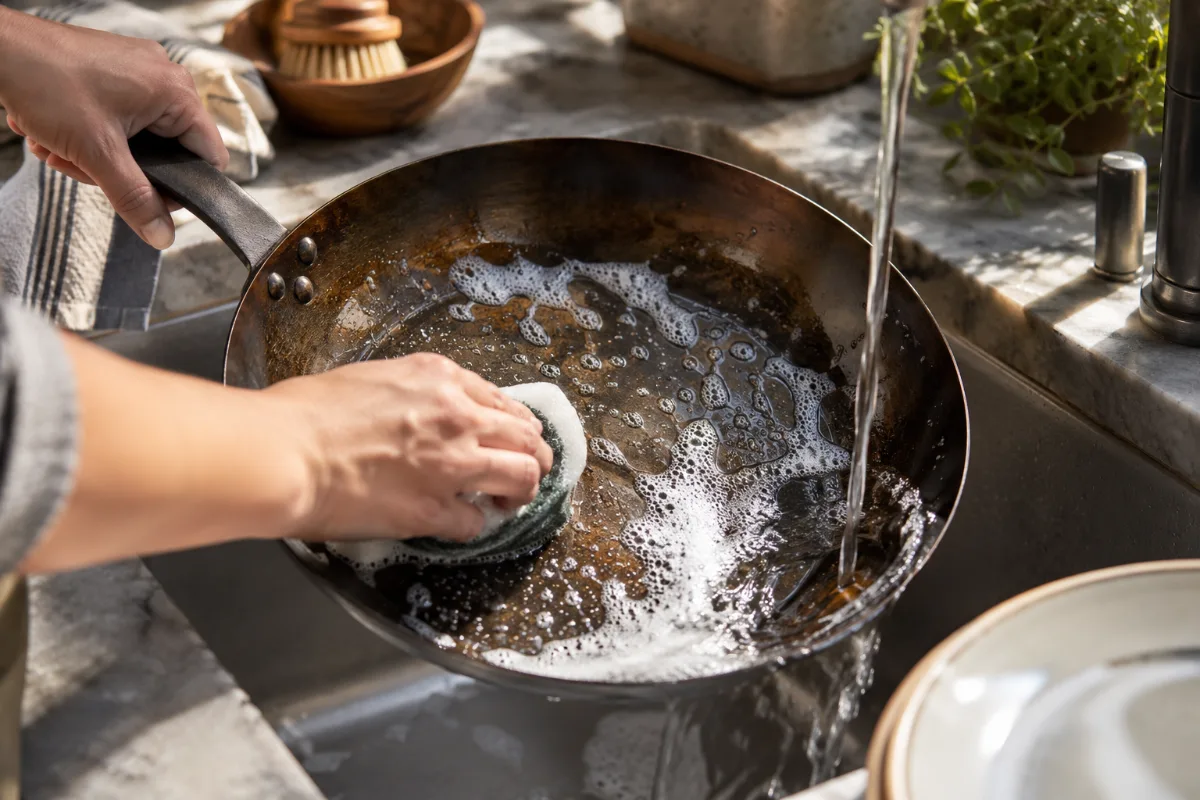
Wash the pan while it is still warm, not screaming hot, with warm water and a soft sponge or brush. Add a small amount of dish soap if there is stubborn food or a greasy residue. For stuck-on bits, a plastic scraper or a chainmail scrubber used gently lifts them without harming the surface. Rinse well.
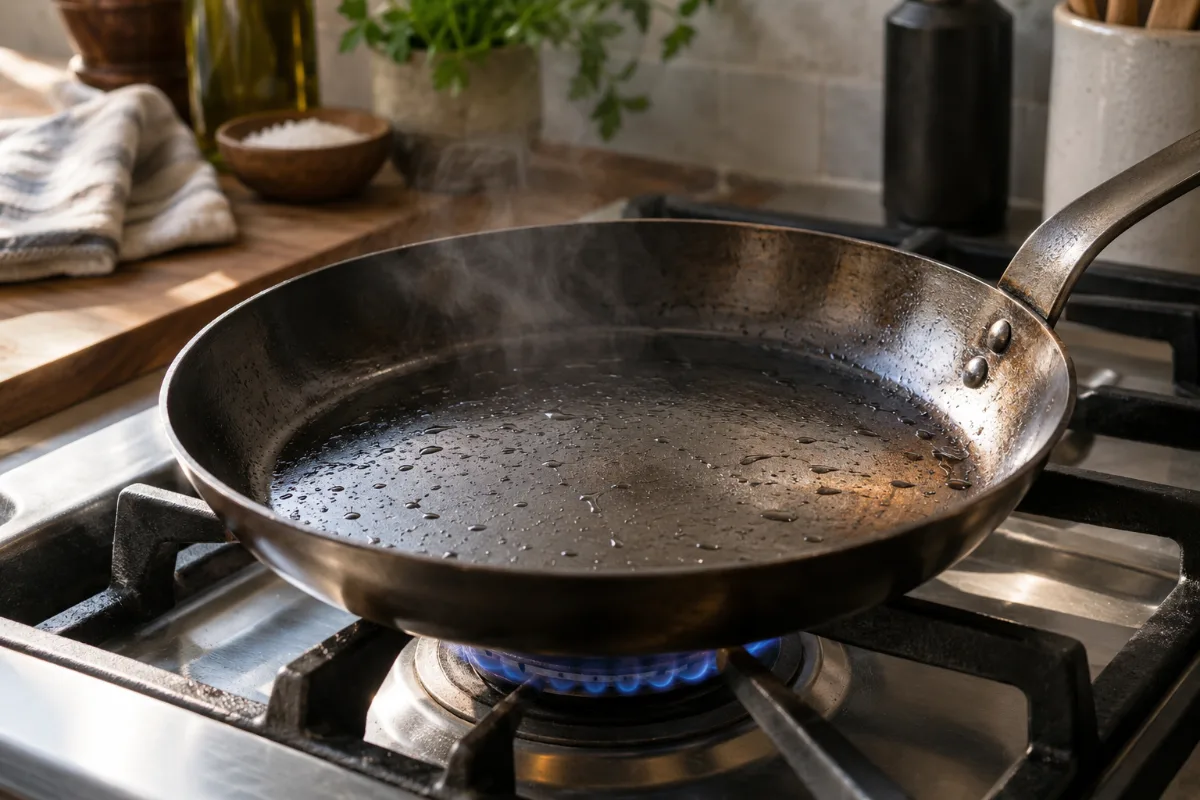
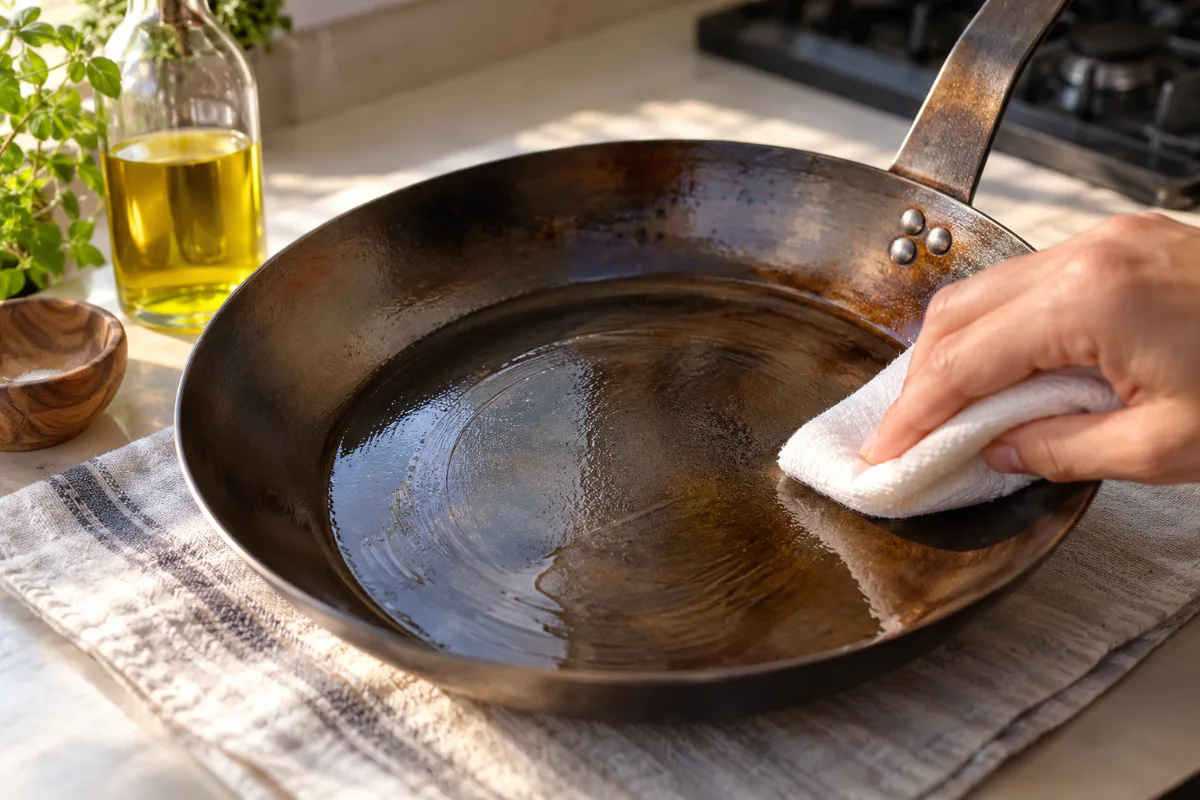
Then dry the pan completely, and do it over heat. Set it back on the burner for a minute until every trace of water flashes off. A pan that only air-dries can hold enough moisture to rust. Finally, wipe on a very thin coat of oil while the pan is still warm and buff off the excess. That film protects the metal until next time. Our full cleaning guide covers tougher jobs step by step.
The drying step is the one people skip, and it matters far more than the soap ever did. Carbon steel rusts when water sits on bare or thinly protected metal. Soap does not cause rust, but leaving a pan wet does. So the order is what protects the pan: wash however you like, then dry thoroughly over heat and re-oil. Get those last two steps right and you can wash with soap every single time without a second thought. Skip them, and even a soap-free rinse can leave you with rust spots by morning.
When to skip the soap
Soap is a tool, not a rule in either direction. After a light cook that leaves little residue, such as searing a steak or making eggs, a rinse with hot water and a soft scrub is often all you need. The pan comes clean, and you save a step.
Reach for soap when the pan is greasy, smells of fish, or has cooked-on food that water alone will not shift. Skip it after a simple cook when the surface wipes clean. Neither choice harms the seasoning, so let the state of the pan decide. This is about what works, not about obeying a myth. For the wider care routine, see our carbon steel care guide.
The freedom to use soap when you need it is one of the quiet joys of a well-seasoned pan. You are not locked into fussy, water-only cleaning that leaves a greasy residue or a fishy smell. You wash the pan properly, the way you would any other, and the cured surface holds. That confidence is what turns carbon steel from an intimidating tool into an everyday one. The people who love their pans are not the ones who baby them. They are the ones who cook in them daily, clean them without ceremony, and keep them dry and lightly oiled.
Soap and carbon steel: myth versus reality
Here is the old belief set against what actually happens.
| Belief | Reality |
|---|---|
| Soap strips seasoning | Modern soap does not strip cured seasoning |
| Never use soap | A little soap is fine when needed |
| Soaking is okay | Long soaking causes rust and harm |
| Dishwasher is fine | The dishwasher strips and rusts pans |
Frequently asked questions
Q: Can you use soap on a carbon steel pan?
Q: Does dish soap ruin carbon steel seasoning?
Q: Why do people say never use soap?
Q: What actually damages carbon steel seasoning?
Q: How should I clean a carbon steel pan?
The takeaway
The no-soap rule is a relic of harsh lye soaps that no longer exist in your kitchen. Cured seasoning is a hardened, bonded layer, and modern dish soap cannot lift it. Wash your pan when it needs it, keep it out of long soaks and the dishwasher, dry it over heat, and re-oil. Do that and you can stop worrying about the soap and start enjoying the pan. If a wash ever dulls a spot, our seasoning guide shows how to build it back in minutes.