How to Restore a Rusted or Neglected Carbon Steel Pan
By the Carbon Steel Pan test team · Last updated September 2026
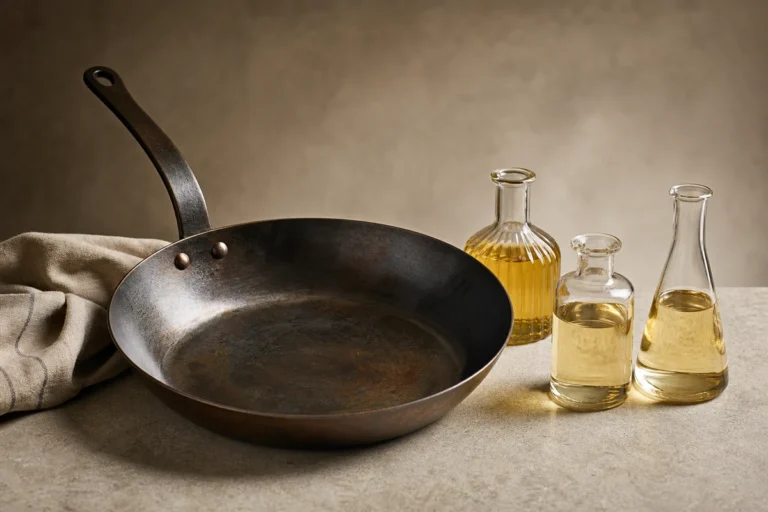
You can almost always restore a rusted carbon steel pan. Scrub the rust off with steel wool or a scouring pad and a little dish soap, rinse, then dry it fully over heat. If the seasoning came off with the rust, wipe on a very thin coat of oil and re-season two or three times. Light rust takes minutes. A badly neglected pan takes an afternoon.
First, don’t panic: rust is reversible
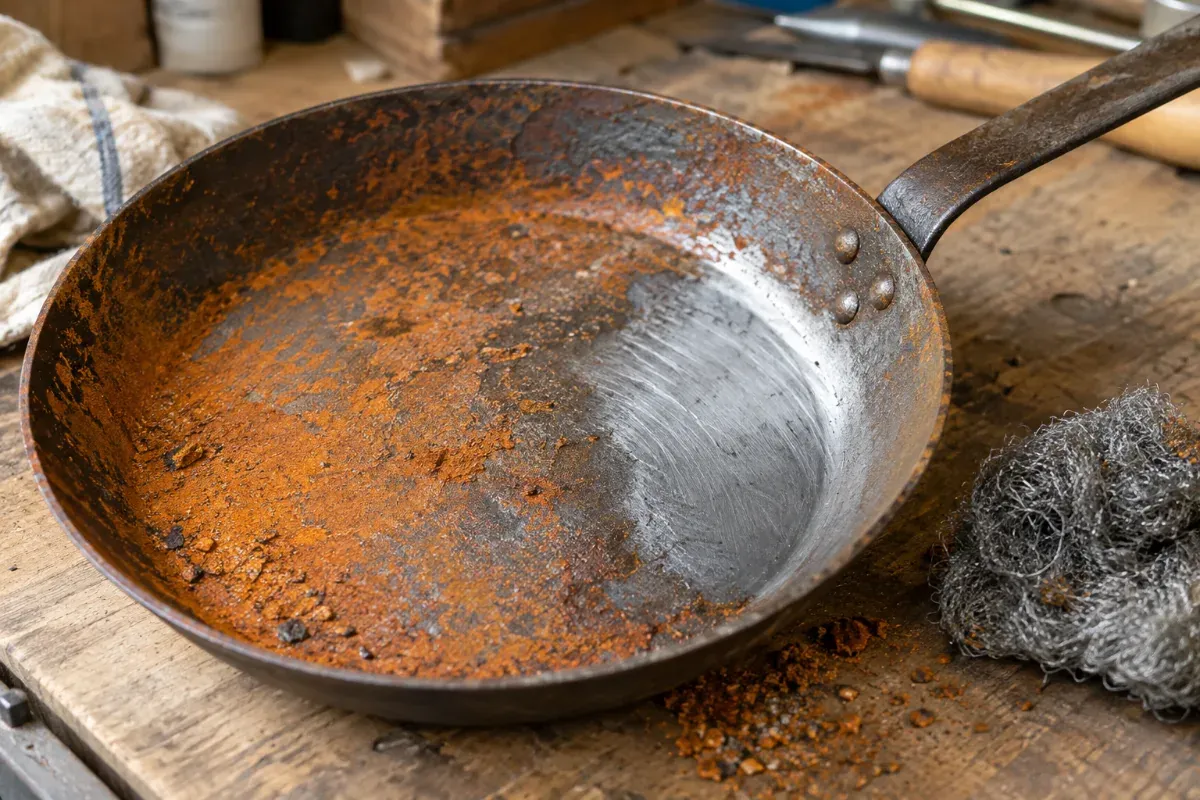
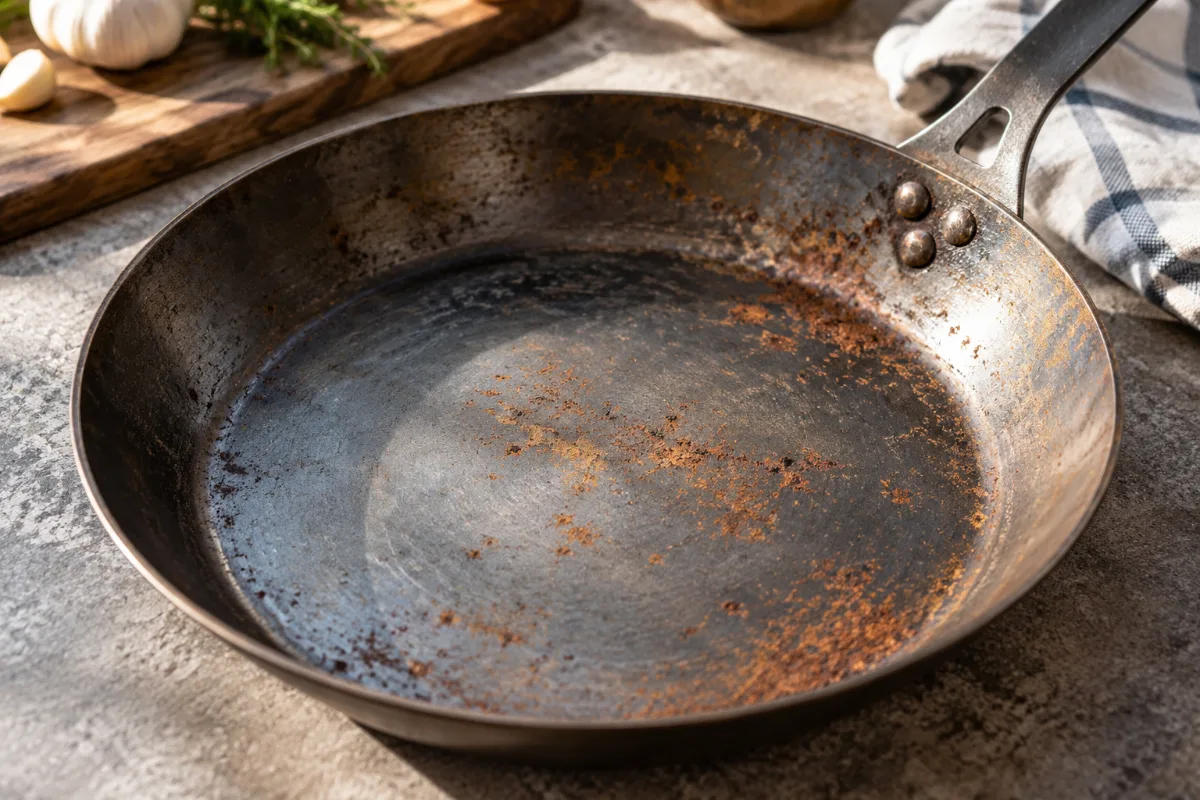
Rust looks like the end of a pan. It is not. Those orange or brown patches are surface iron oxide sitting on top of solid steel. The metal underneath is intact. Remove the oxide, dry the pan, rebuild the seasoning, and it cooks like new.
This matters because people throw away good pans over a little rust. A dishwasher accident, a wet cupboard, or a soak left overnight can spot a pan quickly. None of that ruins the steel. It only strips the protective layer and lets air and water reach bare iron.
So treat rust as a maintenance job, not a death sentence. The steps below scale to the damage. Read the next section, decide which tier your pan falls into, then jump straight to that fix.
Match the fix to the damage
The right method depends on how far the rust has gone. Trying to strip a pan that needs only a quick scrub wastes an afternoon. Doing a five-minute scrub on a pan that needs full stripping leaves rust trapped under fresh oil.
Here are the three tiers.
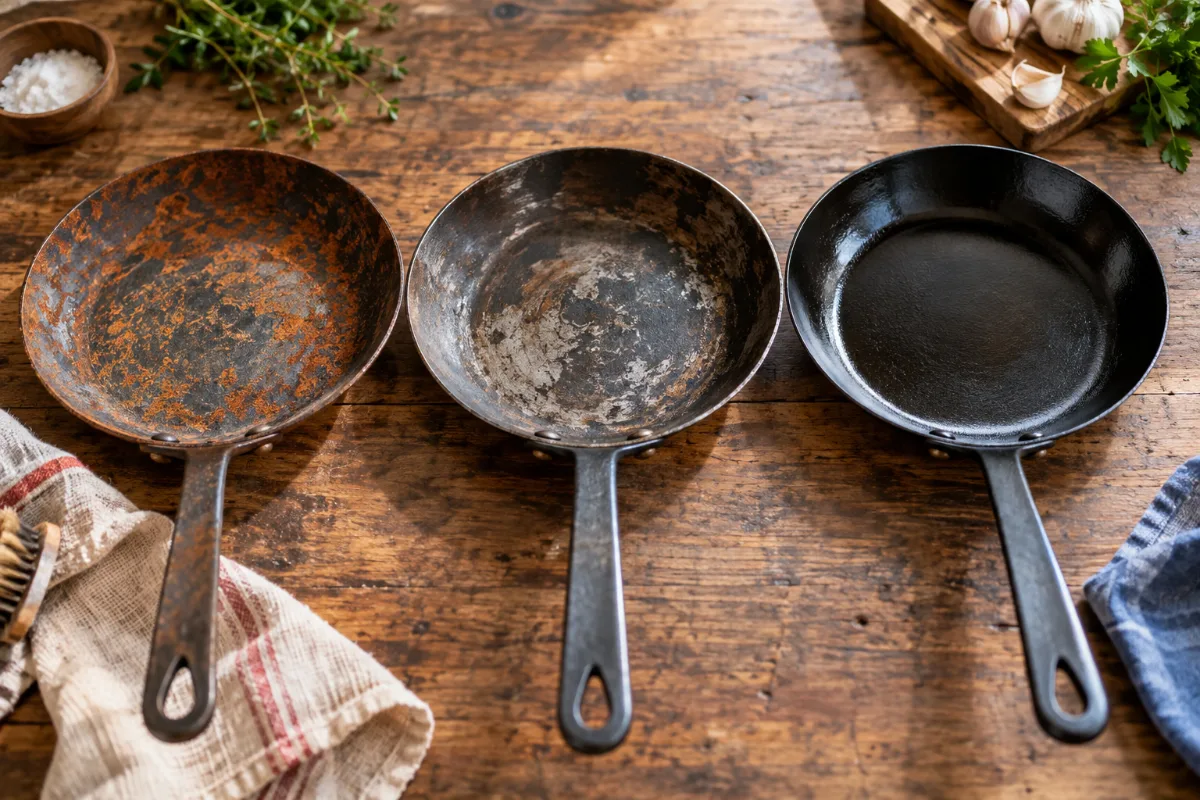
Light rust. A few orange freckles, usually where a drop of water dried. The seasoning is mostly fine. This is a five-minute job.
Moderate rust. Rust sits under flaking or patchy seasoning across part of the pan. You need to scrub back to sound metal and rebuild a couple of layers.
Severe rust. Rust covers most of the surface, the pan feels rough, or someone left it in the dishwasher. Strip it to bare metal and re-season from scratch.
There is also a rare fourth case, a pan that is truly beyond saving. We cover that at the end so you know what real damage looks like. For most people, one of the first three tiers applies.
Quick answer: Our tested guide to restore rusted carbon steel pan keeps it simple: master the technique, keep the surface seasoned, and match your heat to the food. The full method, the key facts and the mistakes to avoid are all below.
Restore Rusted Carbon Steel Pan: What Our Tests Found
Our team put restore rusted carbon steel pan through repeated real cooking sessions to see what actually works. Below we break down the method, the facts that matter, and the common mistakes so you get reliable results the first time.
Light rust: the five-minute fix
If you see only a few orange spots, you can clean them off fast and get cooking the same day. Do not overthink this one.
What you need
- A steel wool pad or a stiff scouring pad
- A drop of dish soap
- A dry towel
- A neutral oil such as grapeseed, canola, or sunflower
The steps
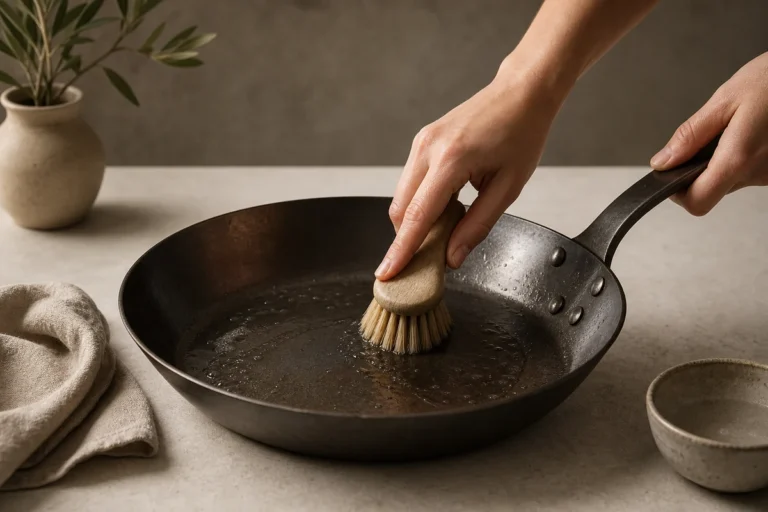
- Wet the pan and add a small drop of soap. Yes, soap is fine here. You are cleaning, not protecting.
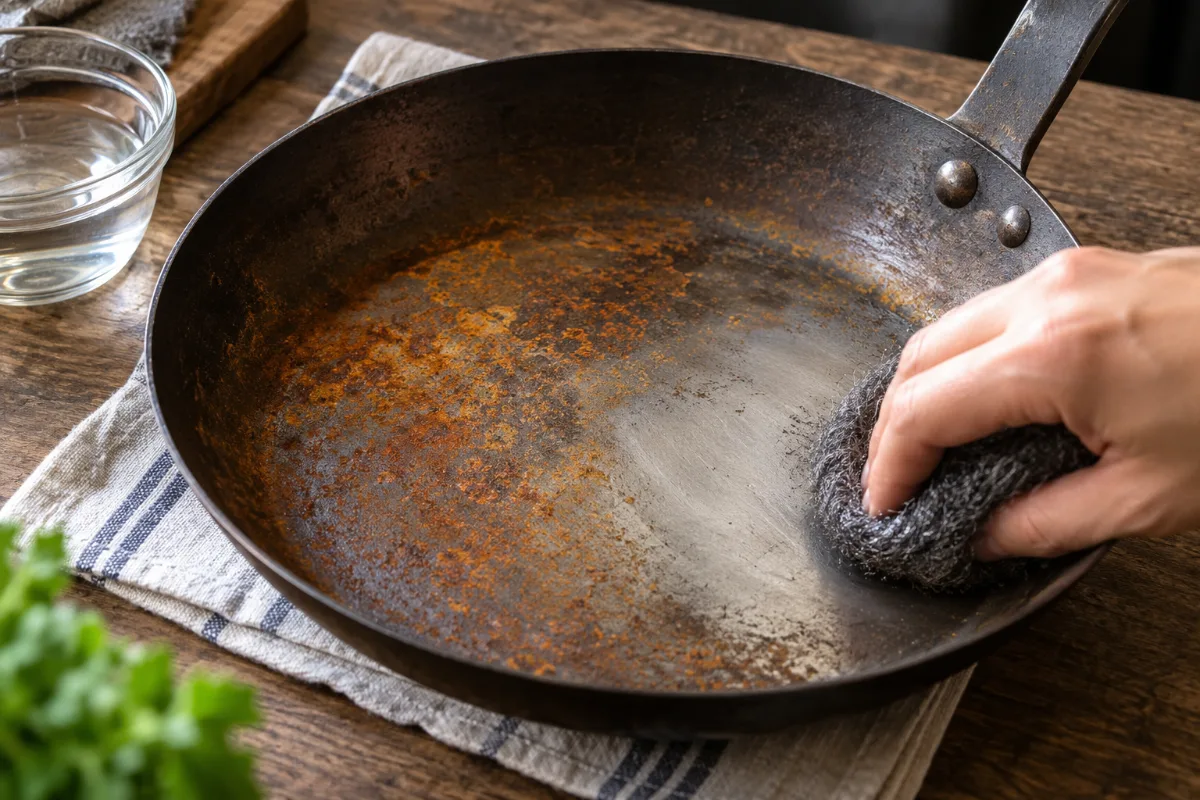
- Scrub the rust spots with steel wool until the orange is gone and you see clean grey metal.
- Rinse under hot water.
- Set the pan on the burner over medium heat. Let it sit until every drop of water evaporates and the surface looks dry and dull.
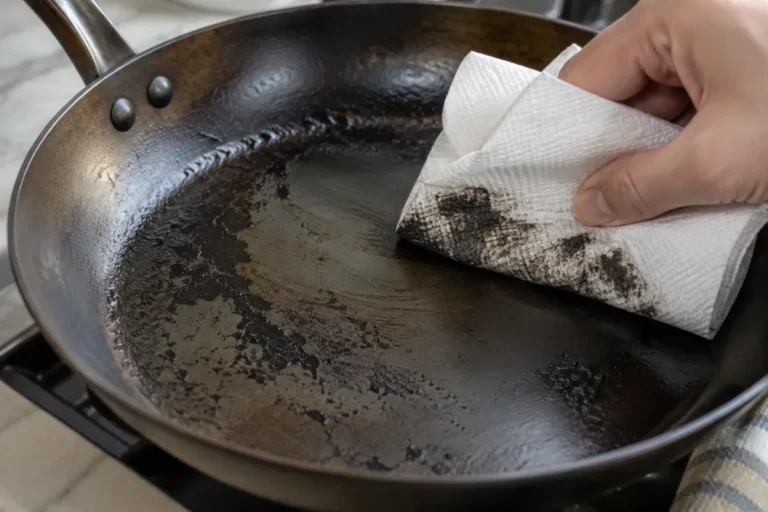
- Take it off the heat, add a few drops of oil, and wipe it across the whole pan with a paper towel. Then wipe again until the pan looks almost dry, not greasy.
That last wipe is the part people skip. A thick coat of oil turns sticky, not slick. You want the thinnest film you can leave behind.
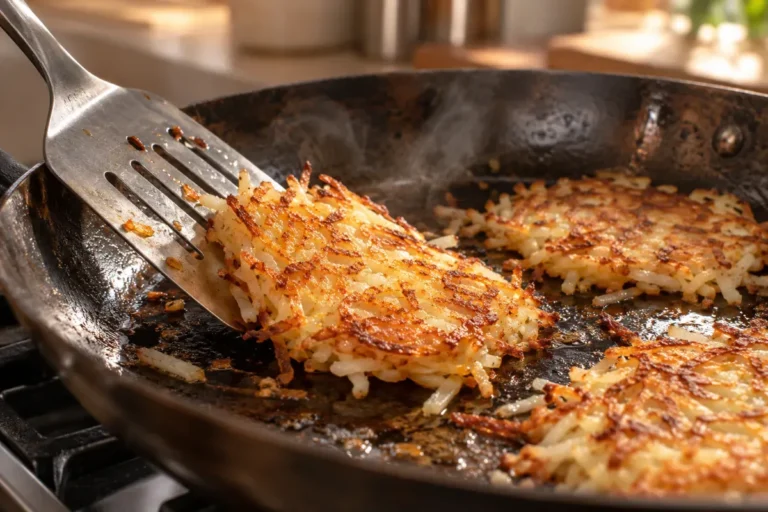
If the surrounding seasoning is still dark and healthy, you are done. Cook something fatty next, like bacon or a batch of onions, and the pan will build itself back up.
Moderate rust and tired seasoning
When rust hides under flaking seasoning, a quick scrub is not enough. Loose seasoning traps moisture against the metal, so rust keeps returning until you clear the failing layer.
Start by scrubbing the affected area back to sound metal. Steel wool works well here. You are looking for two things to disappear: the orange rust and any seasoning that lifts, chips, or feels rough under your fingernail. Leave the dark, smooth, well-bonded seasoning alone. That part is still doing its job.
Wash the pan with a little soap and hot water to clear the grit. Rinse well.
Now dry it hard. Put the pan on the burner over medium-high heat and leave it until it is bone dry, then a minute longer. This step does more than remove water. Heat flash-dries the bare metal before new rust can form. A pan left to air-dry on a rack will often freckle again within the hour, because thin films of water cling to raw iron.
Once the pan is dry and just warm to the touch, rebuild two seasoning layers:
- Add a few drops of neutral oil and wipe the whole pan, inside and out, then wipe again until it looks nearly dry.
- Heat the pan over medium-high, or in a 450°F (verify) oven, until it stops smoking and the surface darkens.
- Let it cool, then repeat once more.
Two thin layers restore enough protection to cook on. The rest builds through normal use. For a deeper walkthrough, see how to re-season a carbon steel pan.
Full rescue: stripping a neglected pan to bare metal
Some pans need everything taken back to zero. An inherited pan caked in old grease, a flea-market find, or a pan that spent a cycle in the dishwasher falls here. The goal is clean, bright grey metal across the entire surface before you re-season.
You have three ways to get there. Pick based on how much rust and gunk you are facing.
Physical stripping
For most severe cases, steel wool and effort win. Work in circles with a coarse pad, adding a little soap and water to carry away the grit. Go over the cooking surface, the sides, and the underside. It is slow, and your arm will feel it, but you control exactly how much you remove.
A palm sander with a fine abrasive pad speeds this up on very rough pans. Keep it moving so you do not gouge the steel.
Chemical strippers, with safety notes
For stubborn rust, a cleanser like Bar Keepers Friend cuts the work. Its active ingredient, oxalic acid, dissolves iron oxide. Make a paste with water, spread it on, wait about a minute, then scrub and rinse thoroughly. Follow the label. Wear gloves and rinse every trace off before you re-season, because leftover acid interferes with a fresh oil layer.
For a pan buried under baked-on carbon, an oven self-clean cycle or a lye bath will strip it to raw metal. These are strong methods with real hazards. Lye burns skin and eyes, so use heavy gloves, eye protection, and good airflow, and keep it away from children and pets. Most home cooks never need this step. Reach for it only on a pan that resists everything else.
Re-seasoning from scratch
A stripped pan is bare and will rust within minutes if you leave it wet, so move straight into seasoning.
- Wash and rinse the clean pan, then dry it fully over the burner.
- Rub a few drops of neutral oil over every surface, then wipe until it looks dry.
- Bake upside down at 450°F to 500°F (verify) for about an hour, or heat it on the stovetop until it smokes and darkens, turning it to hit the sides.
- Cool, then repeat three or four times for a strong base layer.
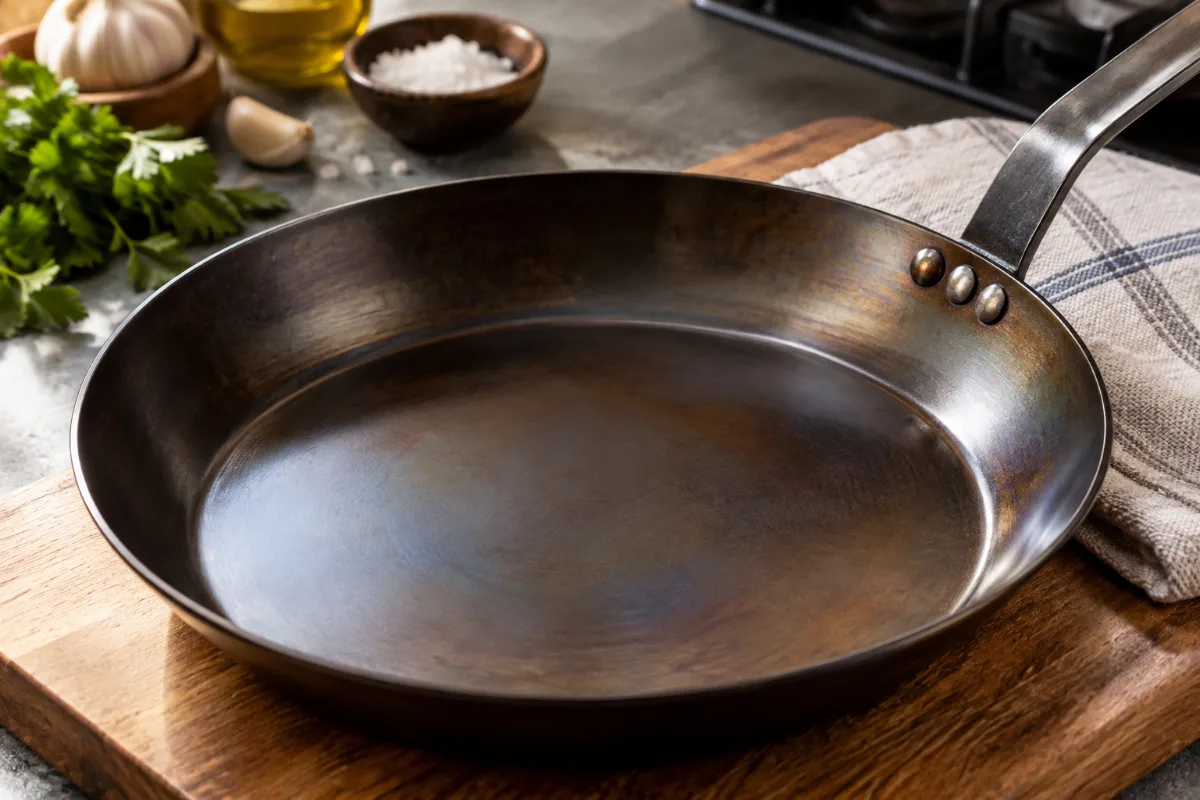
The pan comes out of this bronze to brown. It turns fully black as you cook. Expect real color and reliable release after the first week of use.
Why it rusted, so it does not happen again
A pan that rusted once will rust again unless you change what caused it. Rust needs bare iron plus water plus time. Remove any one of those and you are safe. Here are the usual culprits and the fix for each.
Stored damp. Water hid in the pan or the cupboard was humid. Dry the pan fully over heat every time, and store it somewhere dry with a little air around it.
Air-dried on a rack. Towel-drying leaves a thin film that sits on raw metal. Finish every wash with 30 seconds over the burner.
Left to soak. A long soak strips the oil film and soaks the metal. Wash carbon steel right after cooking instead, while it is still warm.
Went through the dishwasher. Hot detergent and a long wet cycle destroy seasoning fast. Carbon steel is a hand-wash pan, always.
Acidic food left sitting. Tomatoes, wine, and lemon eat through seasoning if they linger. Cook them, then move the food out of the pan promptly.
Build one habit above all: wash, dry over heat, wipe with a drop of oil, done. That 60-second routine ends the rust cycle for good. The full method lives in how to care for a carbon steel pan.
When a pan is truly beyond saving
Almost every pan comes back, but a few do not, and you should know the signs so this guide is complete.
Look for deep pitting. If rust has eaten small craters into the steel that stay rough and dark after you scrub, the metal has thinned in those spots. A pan with heavy pitting will never hold smooth seasoning well and may develop weak points.
Look for a crack or a warp so severe the pan rocks hard and will not sit flat. A crack is structural and cannot be fixed. A minor wobble is livable, but a pan that spins on the burner is done.
These cases are rare. Most pans that look hopeless are just dirty and rusty, not damaged. If your pan has solid metal under the mess, it is worth the afternoon.
Rescue plan by severity
Use this table to confirm your tier at a glance before you start.
| Damage level | What you see | Fix | Time |
|---|---|---|---|
| Light | A few orange spots | Scrub, dry over heat, oil | 5 to 10 min |
| Moderate | Rust under flaking seasoning | Scrub back, wash, dry, re-season x2 | 30 to 45 min |
| Severe | Rust over most of the pan | Strip to metal, full re-season | 1 to 2 hours |
| Beyond repair | Deep pits or a crack | Replace | n/a |
Frequently asked questions
Can a rusted carbon steel pan be saved?
How do I get rust off a carbon steel pan?
My pan went in the dishwasher and rusted. Is it ruined?
Why does my carbon steel pan keep rusting?
Do I need to re-season after removing rust?
The bottom line
Rust is the most fixable problem a carbon steel pan can have. Grade the damage, match the method, and dry with heat every time. A pan that looked ruined this morning can be searing steak by dinner. Once it is back in shape, protect it with the drying-and-oil habit, and learn to spot early trouble in how to remove rust from a carbon steel pan and how to clean a carbon steel pan.
For guidance on rust removal and pan care, cookware makers like de Buyer and Lodge publish care instructions, and America’s Test Kitchen covers long-term maintenance of carbon steel and cast iron.