Storing Carbon Steel in Humid Climates Without Rust
By the Carbon Steel Pan test team · Last updated September 2026
In humid climates, carbon steel rusts in storage when even a little moisture sits on the metal. Beat it by drying the pan fully over heat after every wash, wiping on a slightly heavier oil coat before you put it away, and keeping it in a dry, airy spot instead of a damp cupboard. A well-seasoned pan with an oil film resists ambient humidity far better.
If you live somewhere coastal, tropical, or just plain muggy, you have probably found rust on a pan you were sure you dried. The problem is not you. It is the air. Here is how to store carbon steel so the climate stops winning.
Quick answer: Our tested guide to carbon steel storage rust keeps it simple: master the technique, keep the surface seasoned, and match your heat to the food. The full method, the key facts and the mistakes to avoid are all below.
Carbon Steel Storage Rust: What Our Tests Found
Our team put carbon steel storage rust through repeated real cooking sessions to see what actually works. Below we break down the method, the facts that matter, and the common mistakes so you get reliable results the first time.
Why humidity rusts a “dry” pan
Rust needs three things: iron, oxygen, and water. Carbon steel is mostly iron, and air always has oxygen, so water is the one factor you control. In a dry climate that is easy. In a humid one, the water finds a way even when the pan feels dry to the touch.
Here is what happens. After you wash and towel-dry a pan, a thin, invisible film of moisture often remains, especially in the pores of the metal and around the rivets. In dry air that film evaporates on its own within minutes. In humid air it does not. Worse, moisture from the air keeps settling on any bare or thinly-protected steel, particularly overnight when temperatures drop and humidity climbs. By morning, a pan that went into the cupboard looking dry can carry a faint orange bloom.
This is why the standard advice to air-dry and put the pan away fails in a wet climate. Air-drying leaves surface moisture, and the surrounding air replaces any that does leave. You need to actively drive off every trace of water and then block the air from reaching the metal.
Relative humidity is the number that matters. Rust risk climbs sharply once the air holds a lot of moisture, and in coastal or monsoon regions indoor humidity can sit above 70 percent for weeks (verify). Add the salt in coastal air, which speeds corrosion, and a bare pan can bloom orange in a single day. Knowing this reframes the whole task: you are not fixing a mistake in your drying, you are defending against conditions that fight you around the clock.
Dry it properly, every time
The most important habit in a humid home is drying over heat, not just with a towel. Heat flashes off moisture that a towel and open air leave behind.
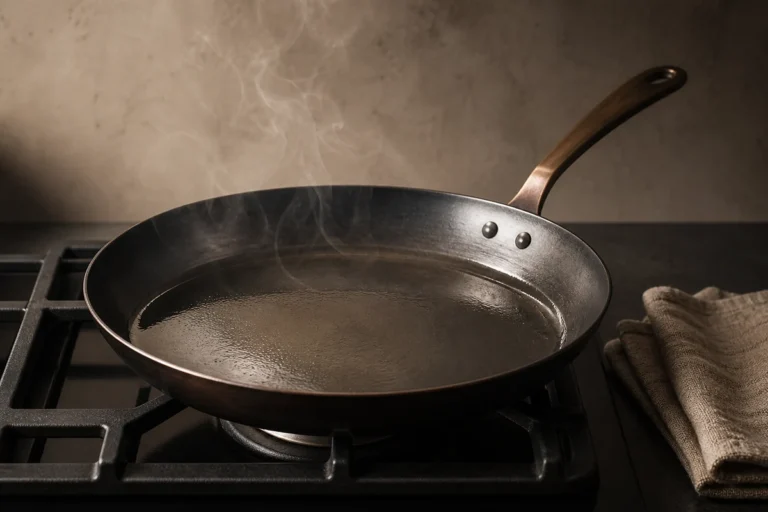
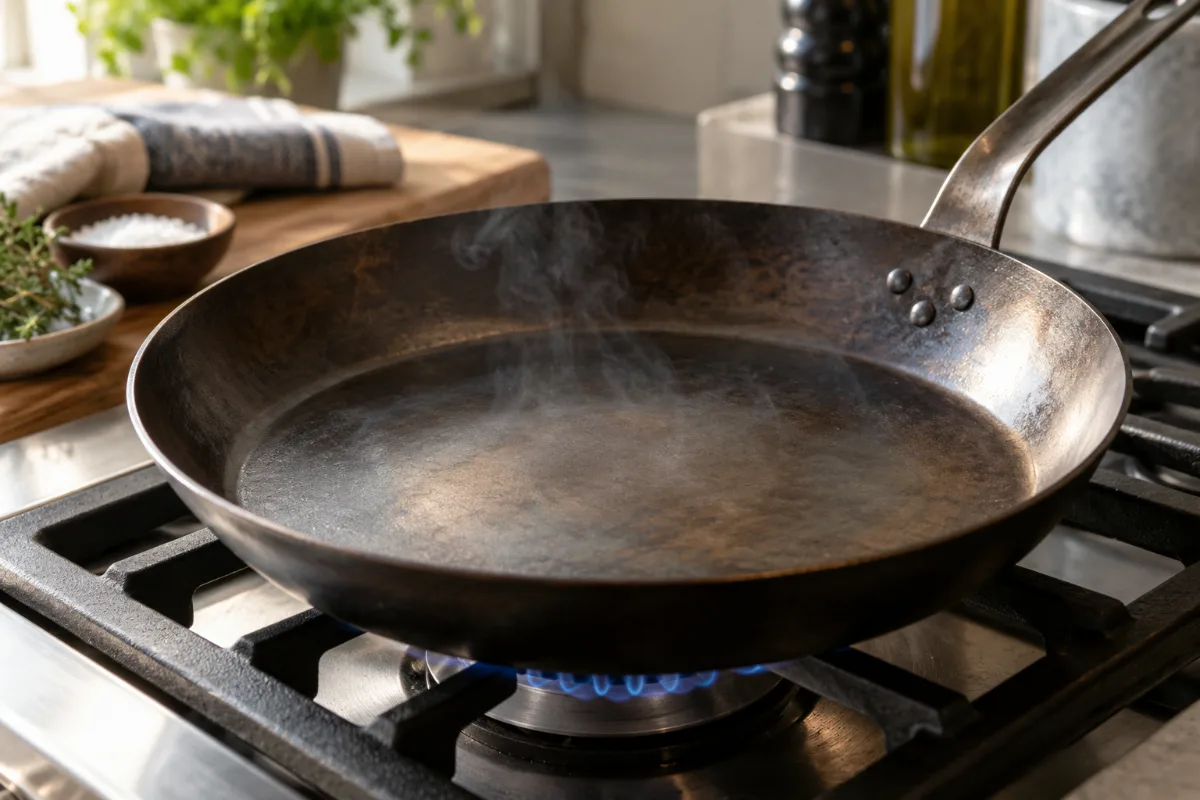
After washing, set the pan on a burner over medium heat for one to two minutes. You will often see faint wisps of steam lift off as the last water evaporates. Keep it there until the surface is bone dry and slightly too warm to hold. This single step removes the film that a towel misses and that humid air will not evaporate on its own.
Do this every single time, not just when you remember. In a dry climate you can skip it. In a humid one it is the difference between a pan that stays clean and one that spots within a day. It takes under two minutes and it works because you are not relying on the air to do the drying.
A quick word on what “dry” really means. A towel-dried pan feels dry to your hand, but your hand cannot detect the thin film that clings in the metal’s pores and around the seams. Heat drives that film off as vapor, which is why you sometimes see faint steam. That steam is the proof the step is working. Once it stops and the pan is too warm to hold comfortably, you know the surface is truly dry, not just dry to the touch.
While the pan is still warm from this step, move straight to the oil coat below. Warm metal takes the oil better and helps it spread into a thin, even film.
The oil-coat barrier
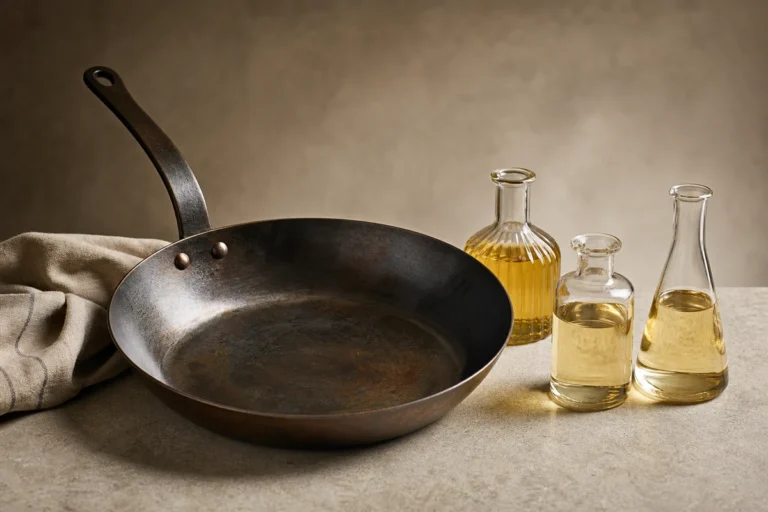
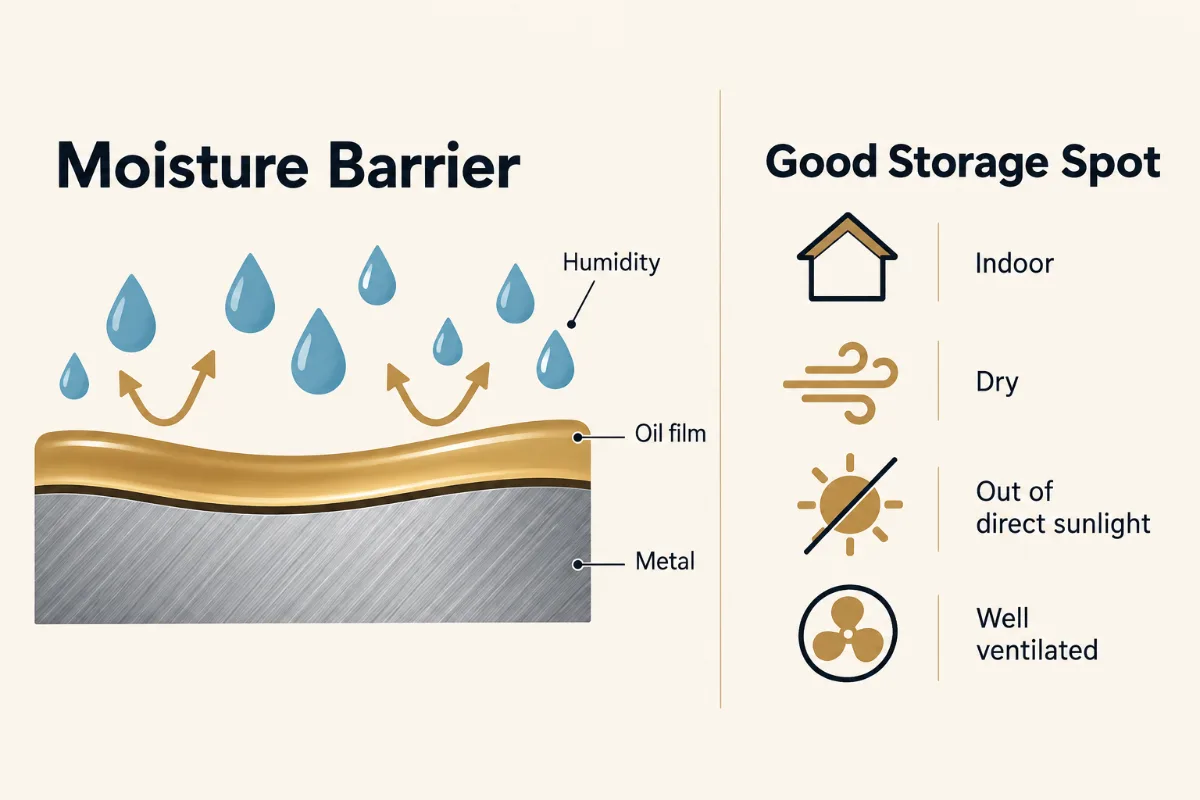
A thin film of oil is a physical barrier between the steel and the moisture in the air. Water cannot rust metal it cannot reach, and a proper oil coat keeps it from reaching.
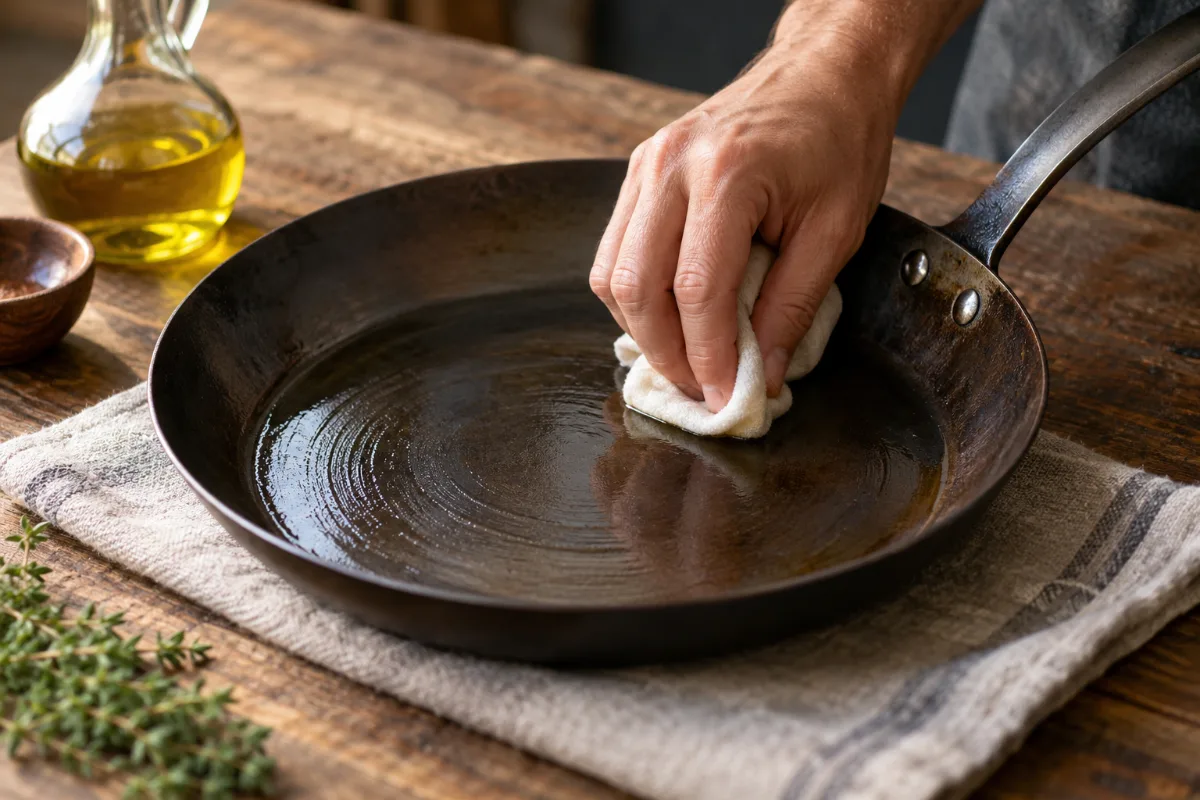
For everyday climates a whisper of oil is enough. In humid or coastal homes, use a little more, though “more” still means thin. Pour a few drops of a neutral oil, grapeseed, canola, or a food-grade mineral oil, onto the warm dry pan. Spread it over the entire cooking surface with a paper towel, then buff it back until the pan looks barely oiled rather than wet. A visible pool of oil goes gummy and can turn rancid, so buff off the excess.
Do the walls and the underside too, not just the cooking surface. Rust often starts on the outside of the pan and around the rivets, spots people forget. A materials principle backs this up: a continuous oil film blocks the oxygen and water that corrosion needs, which is why oiled steel keeps far longer than bare steel in storage.
Reapply this coat regularly, not only after cooking. In a humid climate, a pan that sits unused for a week or two benefits from a fresh wipe of oil even if you have not touched it.
Where and how to store it
Where you keep the pan matters as much as how you prepare it. The goal is airflow and dryness.
Best storage spots
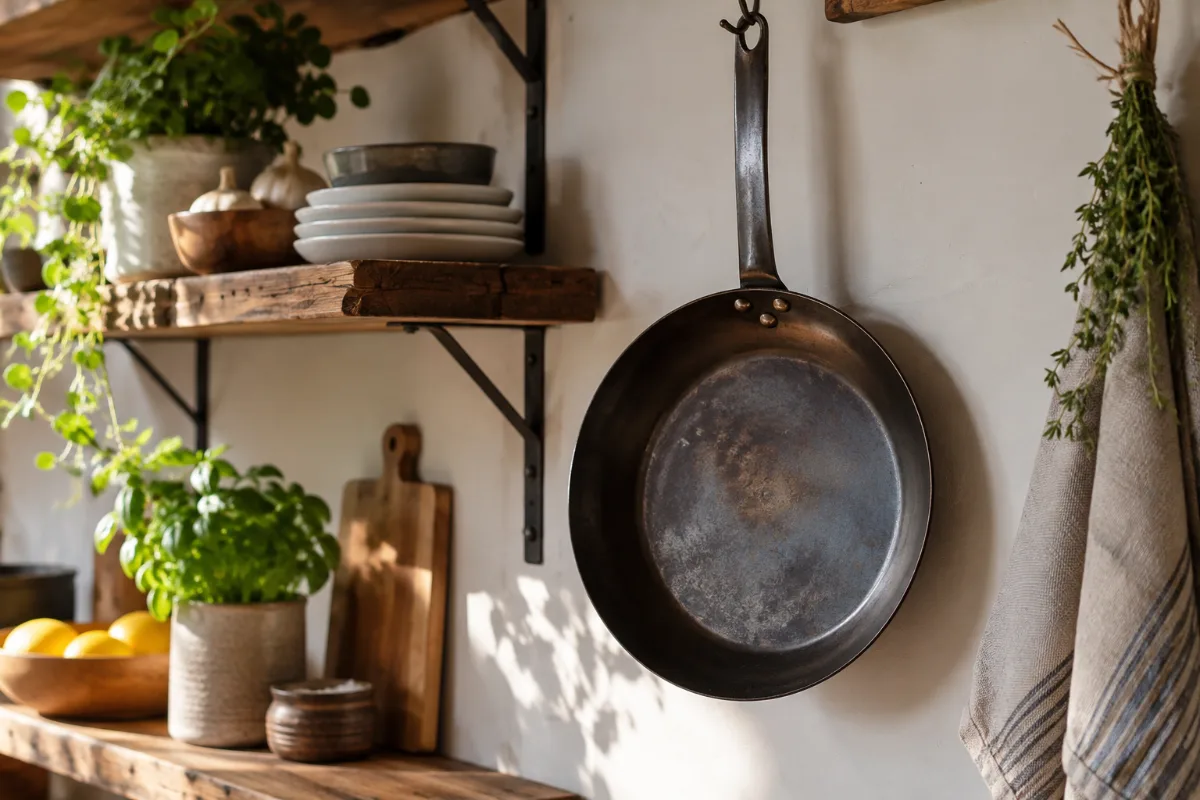
Hang the pan on a rack or a wall hook if you can. Open air on all sides is the best defense, because moisture cannot pool anywhere. A pot rack, an open shelf, or a hook by the stove all work well, and the stove area tends to be one of the driest, warmest spots in the kitchen. If the pan lives on the cooktop itself, even better, as long as it stays out of the way.
An open shelf beats a closed cupboard. A spot near a gently warm appliance beats a cold corner. Anywhere with moving air beats a sealed box.
What to avoid
Do not seal a freshly stored pan in a damp, closed cupboard, especially a lower cabinet near a dishwasher or under a sink where humidity collects. Do not stack pans wet or nest them without a barrier, since trapped moisture between two surfaces rusts fast. If you must stack, slip a paper towel or a cloth between pans to absorb any stray moisture and prevent the seasoning from scratching.
And never put the pan away straight from the sink. That skips the two steps, heat-drying and oiling, that actually protect it.
Extra defenses for coastal homes
If you live near the sea or in a truly tropical climate, standard care may not be enough. Salt air and constant high humidity are the hardest test for carbon steel. A few extra tactics help.
Keep silica gel packs in your storage area or inside a cabinet where the pan lives. They pull moisture out of the surrounding air, and you can dry them out in a warm oven and reuse them. Oil the pan more often, closer to once a week than once a month, since the protective film gets challenged harder. And lean on the simplest defense of all: use the pan. A pan cooked in every day or two never sits long enough to rust, because each cook re-oils and re-heats the surface. The pans that rust are the ones that sit.
Some coastal cooks also keep a dedicated “workhorse” pan in constant rotation and treat a rarely-used pan as the one that needs silica packs and frequent oiling.
A thicker, well-built seasoning layer is itself a defense. A pan with many hardened coats has less exposed metal for moisture to reach, so it resists ambient humidity better than a thinly-seasoned one. Building good seasoning through regular cooking and the occasional thin oven-cure pays off twice: better release at the stove and better rust resistance in storage. In a tough climate, the pan you cook with often and keep well-seasoned is the one that gives you the least trouble.
Humid-climate storage do’s and don’ts
| Do | Don’t |
|---|---|
| Dry fully over heat | Air-dry and put away |
| Wipe on a thin oil coat | Store bare metal |
| Store in an airy, dry spot | Seal in a damp cupboard |
| Re-oil every week or two | Forget it for months |
| Use the pan often | Stack it wet with others |
Catching rust early
Even with good habits, a spot of rust can appear in a tough climate. Caught early it is a two-minute fix, not a disaster.
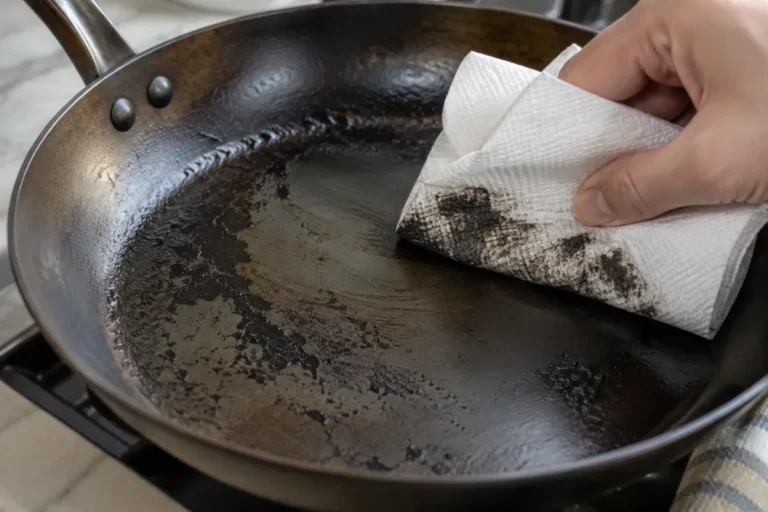
Check the pan when you pick it up to cook. Look for faint orange or a slightly rough feel on the surface, walls, and around the rivets. If you find a light bloom, scrub it off with a chainmail scrubber or a bit of steel wool, dry the pan over heat, and re-oil. Small rust does not mean the pan is ruined or that the seasoning failed. It means the climate got a foothold, and you closed it.
For anything heavier, our guide to removing rust from a carbon steel pan covers the full restoration, and our care guide lays out the daily habits that keep rust from starting.
The pans that survive humid climates for decades are not the ones that never see moisture. They are the ones whose owners catch the early signs and stay ahead of them.
Frequently asked questions
How do I store carbon steel in a humid climate?
Why does my carbon steel rust in the cupboard?
Does oiling stop storage rust?
Where should I store a carbon steel pan?
How often should I re-oil a stored pan?
The short version
Humidity beats a “dry” pan because air-drying never removes all the moisture, and the surrounding air keeps adding more. Fight it on three fronts: drive off every trace of water by drying over heat, block the air with a thin oil film on the whole pan, and store it somewhere open and dry rather than sealed and damp.
In coastal or tropical homes, add silica packs, oil more often, and cook with the pan regularly so it never sits idle. Check for early orange each time you cook, and deal with any spot at once.
Carbon steel storage rust is not a sign the pan is fragile or a poor choice for your area. It is simply what bare iron does when moisture reaches it, and every step above is aimed at keeping that from happening. Cooks in the most humid corners of the world keep their pans clean and rust-free with exactly this routine. Follow it and even a wet climate will not keep your carbon steel from lasting for decades.